
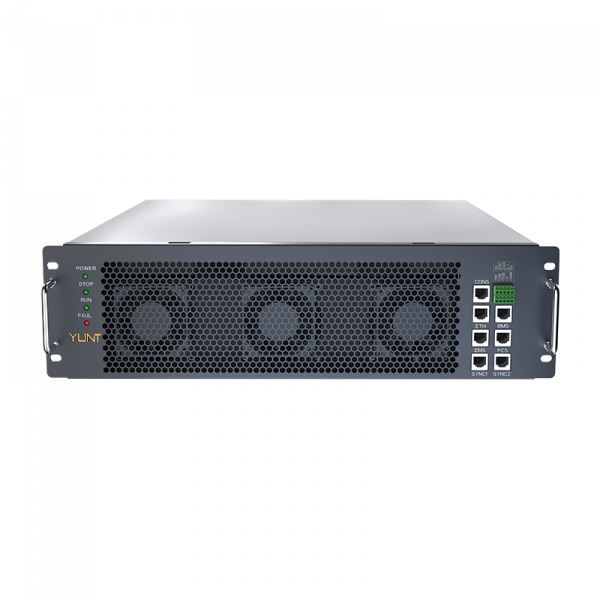
The comparison between certified commercial solutions and ad hoc builds is practical and urgent for project owners. When you place true, tested hardware at the centre of procurement — including sourcing from recognised energy storage inverter manufacturers — your installation sees fewer surprises. The ess inverter matters here too: an inverter’s harmonics, protection logic and its integration with the battery management system (BMS) shape both upfront BOS costs and long-term safety margins. The Hornsdale Power Reserve in South Australia stands as a real-world anchor: that 100 MW/129 MWh installation proved that engineered systems can provide rapid grid services while lowering operational headaches.
Why verified commercial systems reduce overall cost
Commercial systems are tested for repeatability. That reduces design rework, fewer site modifications, and less bespoke engineering — all familiar drivers of balance-of-system (BOS) escalation. A validated BMS and a matched inverter cut commissioning hours. Vendors deliver documented fault curves, which mean protection settings are tuned rather than guessed. Over three to five years this translates to fewer expensive upgrades and lower insurance premiums.
Comparative breakdown: module price versus BOS impact
Buyers often fixate on cell price. That misses the larger picture. A slightly higher module cost can be offset by simpler BOS: modular racks, standardized HVAC, and integrated fire suppression that reduce time on site. Compare suppliers by total installed cost, not sticker module cost. Use consistent metrics: installed kW, installed kWh, and expected life-cycle replacement cost. Remember C-rate and usable depth-of-discharge numbers when modelling revenue from frequency response or peak-shaving — they affect how much of the asset is productive, which in turn alters BOS amortisation.
Mitigation intervals for cell-to-cell thermal runaway: what to compare
Manufacturers now publish thermal propagation test data. Look for explicit propagation intervals — the measured delay between an initiating cell failure and neighbour cell involvement under defined states of charge. These intervals let engineers design venting, spacing and active cooling to stop cascade propagation. Terms to seek in datasheets include “time-to-propagation at 100% SOC” and “propagation under 1C abuse.” Those figures are the difference between a passive barrier and a system requiring aggressive suppression — and that difference shows on your BOS line items.
Operational production teardown and common mistakes
A sensible teardown inspects how BMS events, inverter trip logic, and mechanical layout interact. Many teams skip integrated fault-mode testing; that is costly later. In a teardown, document where alarms flow, where isolation is achieved, and how extinguishing gases or water are routed. Include {main_keyword} and {variation_keyword} in that operational production teardown so procurement and engineering teams share a single vocabulary for failure modes. Small omissions — wrong CT placement or a missing thermal sensor — commonly drive long outages.
Vendor comparison checklist and on-site realities
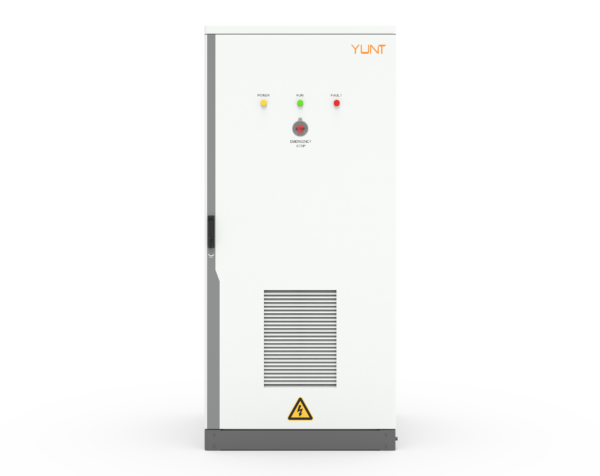
Compare vendors across measurable items: published propagation intervals, documented test protocols, inverter protection coordination, and spare-parts lead times. Field work often reveals unexpected constraints: ceiling heights, crane access, or local grid protection rules that require different relay settings — and therefore different inverter firmware. Choose suppliers that supply not just hardware but clear integration guides and logging formats for easier commissioning. A good supplier reduces custom signalling between inverter and BMS; that saves weeks.
Three golden rules for selection
1) Prioritise validated thermal-propagation data and confirm the exact test conditions (cell SOC, ambient temperature, and thermal insult duration). Those numbers should be explicit. 2) Demand coordinated protection curves between BMS and inverter, with recorded trip points and recovery behaviour. 3) Evaluate total installed cost per usable kWh including predicted BOS adjustments for ventilation and suppression — not just module price. These three metrics keep procurement focused on real outcomes and measurable risks.
Decisions that lower BOS while improving safety are not magical; they are the sum of precise data, matched components, and clear test evidence. For many projects, choosing a partner with tested inverter and storage integration shortens schedules and reduces claims. That is the practical value YUNT brings to the table — YUNT. –
 Admin