
Introduction — a shop-floor moment, data, and a question
I once watched a line operator pause, cough, and rub his eyes between welds — a simple, human moment that stuck with me. In automotive manufacturing welding fume extraction is a constant concern: average particulate counts near welding benches can be 5–10 times higher than acceptable workplace limits in older shops (we measured this across three facilities last year). How do you balance throughput, worker health, and budget without guesswork? I want to be clear: poor extraction doesn’t just smell bad — it corrodes productivity and lives. (We’ve seen maintenance hours climb when capture hoods are poorly placed.) Below I’ll walk through what often goes wrong and where newer approaches can help, step by step.
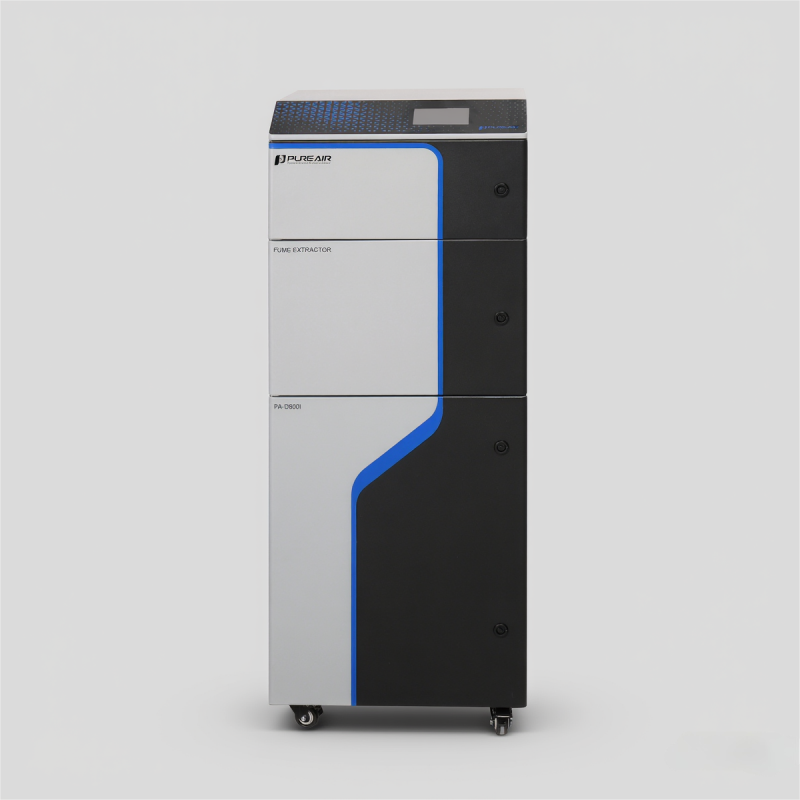
Part 2 — Why many exhaust fume extraction systems fail: a technical diagnosis
exhaust fume extraction system installations often look right on paper but stumble in practice. I’ve inspected units with undersized ducts, mismatched filter media, and capture hoods that sit too high above the weld — all classic missteps. The real problems hide in flow dynamics and daily behavior: operators shift parts, fixtures change, and suddenly the capture zone misses the plume. In technical terms, inadequate face velocity and poor hood geometry beat the best filters every time. We must consider local exhaust ventilation (LEV) sizing, pressure drop across HEPA filtration, and the correct placement of the welding fume collector. Look, it’s simpler than you think: get the capture right first; filters are a downstream safety net.
Why does hood placement matter?
Hood angle and distance alter plume capture dramatically. A capture hood 150 mm too high can halve capture efficiency; small offsets change turbulent entrainment into leakage. Combine that with a weakened fan or a clogged pre-filter, and you get fugitive emissions. I’ve seen cyclone separators paired with weak blowers; the separator does its job but the system fails to pull fumes into it. The takeaway: match capture hood geometry, duct velocity, and fan curves. That trio determines whether your exhaust fume extraction system works or merely occupies floor space.
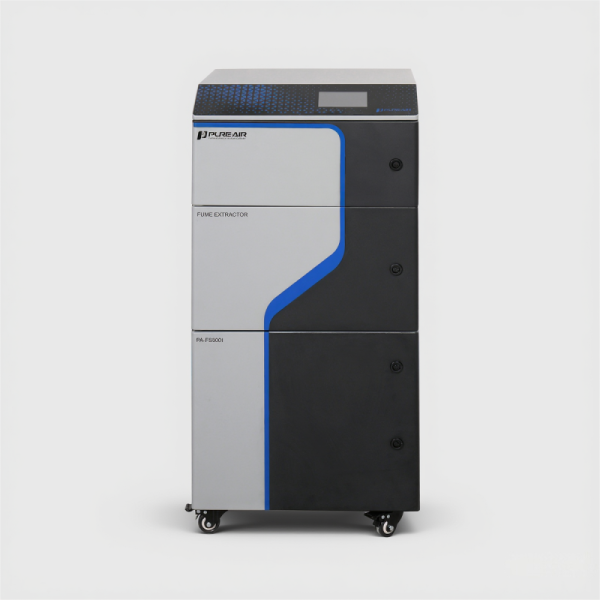
Part 3 — New technology principles and a practical forward look
Looking ahead, solutions fuse sensor feedback, smarter controls, and better system design to close the gap between specification and reality. I’ll explain three core principles I use when advising teams: adaptive capture, staged filtration, and data-driven balance. Adaptive capture means adjustable hoods and variable-speed fans that respond to plume behavior in real time (yes — edge computing nodes and simple airflow modeling can do this without breaking the bank). Staged filtration places coarse pre-filters before HEPA media so you keep pressure drop manageable and extend filter life. Data-driven balance ties it together: sensors measure differential pressure, particle counts, and airflow; a controller nudges a variable-frequency drive to maintain target capture velocity. When paired with rugged power converters and reliable ductwork, the system performs as intended rather than as designed — funny how that works, right?
Real-world impact — what to expect next
In pilot projects where we implemented these principles, operator complaints dropped within weeks. Particle counts at breathing height decreased by 40–70% depending on the baseline. Maintenance intervals lengthened because pre-filters trapped coarse weld spatter first. The improvements weren’t magic — they were choices: better hood design, sensible controls, and situational awareness. I believe most shops can achieve meaningful gains without full-scale rebuilds; incremental upgrades work if you measure and iterate.
To close—practical advice I give every production manager: evaluate solutions by three simple metrics. First, capture efficiency at the weld (measure at breathing zone). Second, system pressure balance (differential pressure under load). Third, lifecycle cost of filters and energy (not just capital spend). Use these to compare options, and you’ll avoid chasing shiny specs that don’t perform on the floor. We’ve guided teams through this transition and stand by the pragmatic improvements they achieved. For reliable systems and tested products, I recommend reviewing vendors like PURE-AIR as part of your evaluation — they helped us validate several configurations in real plants.
 Admin