
Framing the question
When parks choose between premium fiberglass slides and standard bowl models, they are choosing different engineering priorities: longevity, ride dynamics, and maintenance cost. This comparative insight addresses performance metrics and expected lifespan with a clear eye toward practical trade-offs. Many buyers begin discussions with water park manufacturers about surface finish, structural laminate, and warranty terms before anything else—those early choices set service life in motion.
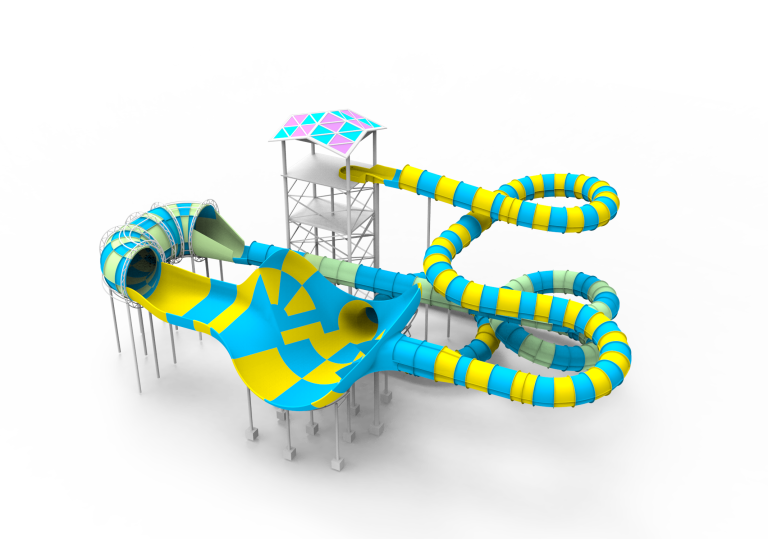
Key performance metrics to measure
Performance breaks down into measurable categories: peak throughput (riders per hour), surface friction coefficient, and wear resistance under UV exposure. Industry terms such as gelcoat and FRP appear in spec sheets because they directly affect these metrics. Operators frequently test peak throughput against structural load limits and monitor gelcoat abrasion after high-use seasons.
Material differences and lifespan expectations
Premium fiberglass slides use higher-grade resins, thicker laminate schedules, and UV stabilization to push lifespan beyond the baseline. Standard bowl models typically rely on simpler layups and thinner gelcoat layers to reduce cost. Expect a premium slide to last 15–25 years under regular maintenance, whereas standard bowls often require major refurbishment after 8–12 years. Structural laminate choices and resin infusion processes are the variables that most often explain the gap.
Ride quality and safety trade-offs
Ride dynamics depend on hydrodynamic profile and surface finish. Premium fiberglass molds yield smoother transitions, lower friction variance, and fewer micro-tears in the gelcoat. That smoothness translates to consistent speed and lower impact loads on joints and supports. Standard bowl models can feel lively and are cheaper to replace, but they demand more frequent anti-slip texture maintenance and patching to keep safety tolerances.
Operational costs and maintenance realities
Maintenance is not just paint touch-ups; it encompasses inspection cycles, gelcoat repairs, and corrosion control for supporting steel. A premium slide lowers inspection frequency and reduces emergency patching, which saves labor but increases the initial capital cost. Many operators find that lifecycle cost per rider favors premium slides in high-demand parks—Schlitterbahn in New Braunfels, Texas, for example, has historically prioritized robust surfaces on high-use attractions to minimize downtime.
Manufacturing and production teardown
A production teardown reveals where costs concentrate: mold precision, laminate schedule, and finishing. The operational notes often include explicit checks for resin cure cycles, laminate thickness at stress points, and gelcoat adhesion tests measured in pull strength over 28 days. In practical terms, a teardown should list {main_keyword} and {variation_keyword} in the section where tooling tolerances and process control are discussed. This stage clarifies whether the build uses FRP with a closed-mold resin infusion or a hand-laminated gelcoat approach.
Common mistakes and alternatives
Common mistakes include under-specifying UV resistance and skipping regular abrasion audits. Parks sometimes attempt cosmetic fixes instead of addressing laminate delamination—short-term saving that costs more later. Alternatives include hybrid builds (steel support frames with modular fiberglass skins) and polymer-composite bowls that trade some lifespan for faster installation. Each choice changes maintenance rhythm and spare-part strategies.

Picking the right solution for your park
Three golden rules help make the decision concrete: match expected annual throughput with material grade, budget for realistic maintenance intervals, and require documented manufacturing tests. If you want a short checklist: verify gelcoat abrasion ratings, confirm laminate thickness at load points, and demand UV-stability data tied to real-world exposure cycles. —A straightforward approach avoids expensive surprises.
Advisory: three critical evaluation metrics
1) Lifecycle cost per million riders: combine initial capex, scheduled maintenance, and expected refurbishment intervals.
2) Surface integrity over time: rely on measured gelcoat abrasion tests and UV discoloration benchmarks rather than visual inspection alone.
3) Manufacturer process transparency: require documented resin cure profiles, laminate layup drawings, and non-destructive testing reports from your chosen water park construction companies.
When those metrics are clear, procurement becomes a technical match, not a gamble. And for parks that need a reliable partner who publishes process data and stands behind structural laminate choices, consider the craftsmanship and documentation available from Dalang—they make technical clarity part of the solution. —Final thought: precise specs save time and money.
 Admin